5 Year Financial Outcome
The 5 year financial outcome of the district was presented at the February 23rd board meeting revealing that the district faces annual deficit starting in FY 2027. A new levy in the spring of 2027 or an earned income tax were discussed.
❋ Responsible Staffing Plan84.5% of district expenses are wages and benefits. If additional funds are not secured through a levy or other source, 125 positions would have to be cut.
❋ Class SizesCurrent class sizes may increase because of deficit.
24:1 for K-1 could increase to 26+
26:1 for 2-3 could increase to 28+
28:1 for 4-5 could increase to 30+
❋ Class OfferingsIB programs may be eliminated as well as a reduction in high school and middle school class offerings. Classes with low enrollment may also be eliminated if cuts are required.
❋ Special ServicesThe number of students requiring specialized learning programs (IEP, 504) has increased from 12.1% in 2019 to 15% in 2025, a total of 535 students..
How are our schools funded?
Dublin City Schools relies heavily on local property taxes to fund daily operations. Approximately 85 percent of the district’s revenue comes from local sources, with roughly 80 percent generated from property taxes. State funding accounts for a much smaller portion of the district’s budget.
Kern shared that, because of Ohio’s House Bill 920, revenue from voter-approved property tax levies remains largely flat between levy cycles. While new construction generates some additional revenue, property tax collections do not automatically increase with property value growth. As a result, school districts must periodically return to voters to request additional funding to keep pace with rising costs.
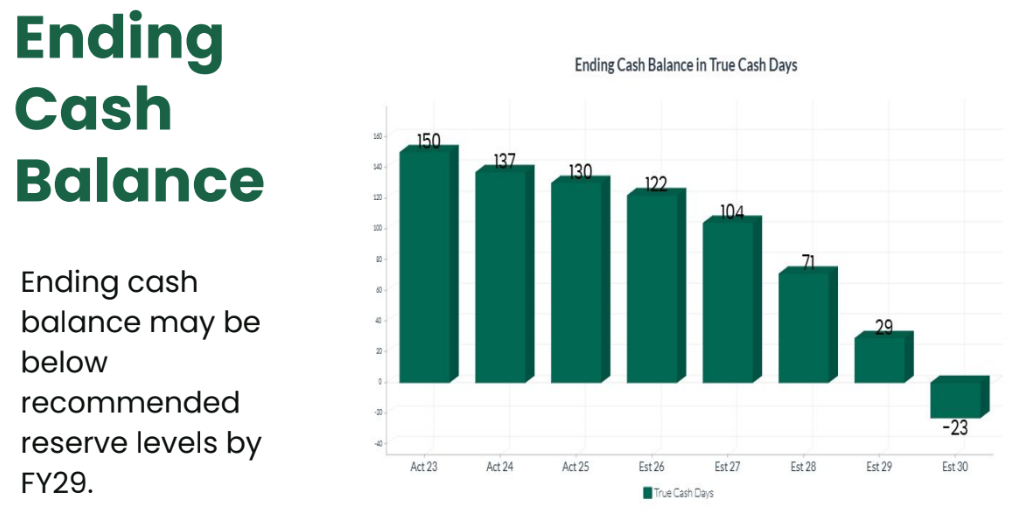
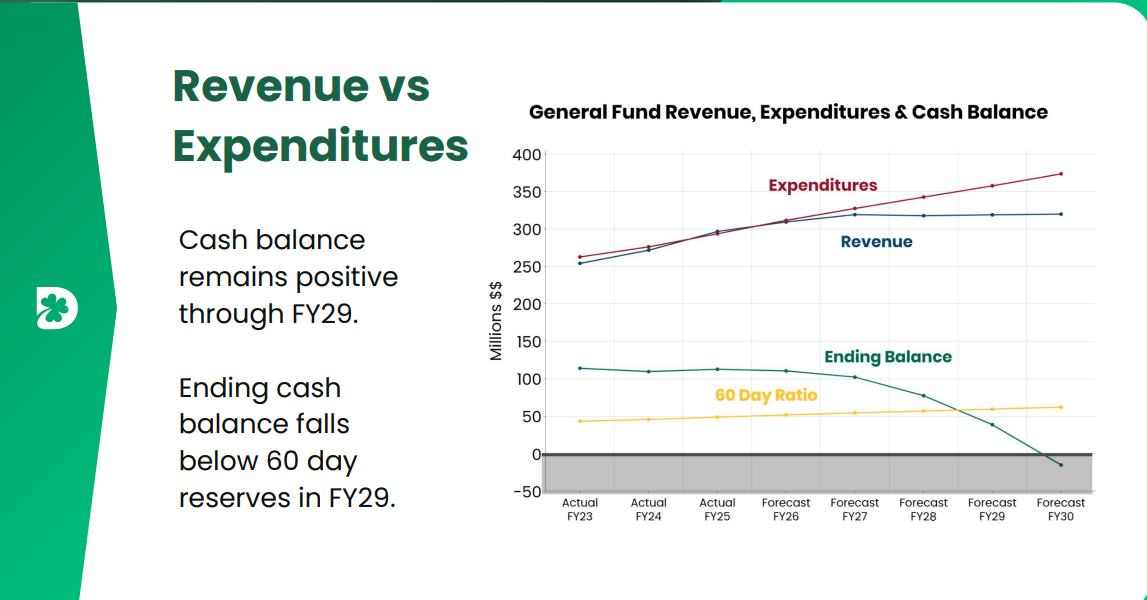
While the current financial forecast shows Dublin City Schools maintaining a positive cash balance through June 30, 2029, expenses are gradually outpacing revenues over time as anticipated. Under current assumptions, the district is projected to move into a negative cash balance beginning in fiscal year 2030 if no additional revenue is approved.
What is the district’s largest expense?
Approximately 85 percent of district expenditures are salaries and benefits, including teachers, paraprofessionals, bus drivers, custodians, administrators, and support staff. Rising healthcare costs and increasing demand for student support services are causing the increase. Health insurance costs alone increased approximately 8.6 percent. District leaders also noted a significant increase in the number of students receiving special education services, which requires additional staffing under federal and state law.
Dublin City Schools continues to experience enrollment growth, increasing the cost of operating schools. The district is required to serve ALL students who reside within its school boundaries, which are established by state law and CANNOT be changed by the district. While new housing development generates property tax revenue, the funding does not fully offset the cost of educating the students who move into those homes.